
Blue Lion Preschool
Singapore
Singapore’s first contemplative, non-profit preschool rooted in Buddhist wisdom and values, with a bilingual English-Chinese curriculum.
Visit website →
Network
These are the schools and programs that make up the Passiko network, a diverse community grounded in a common set of shared principles.
Singapore
Singapore’s first contemplative, non-profit preschool rooted in Buddhist wisdom and values, with a bilingual English-Chinese curriculum.
Visit website →
Bangkok, Thailand
A new primary school for children ages 3 to 11, with instruction in Chinese, English and Thai.
Visit website →
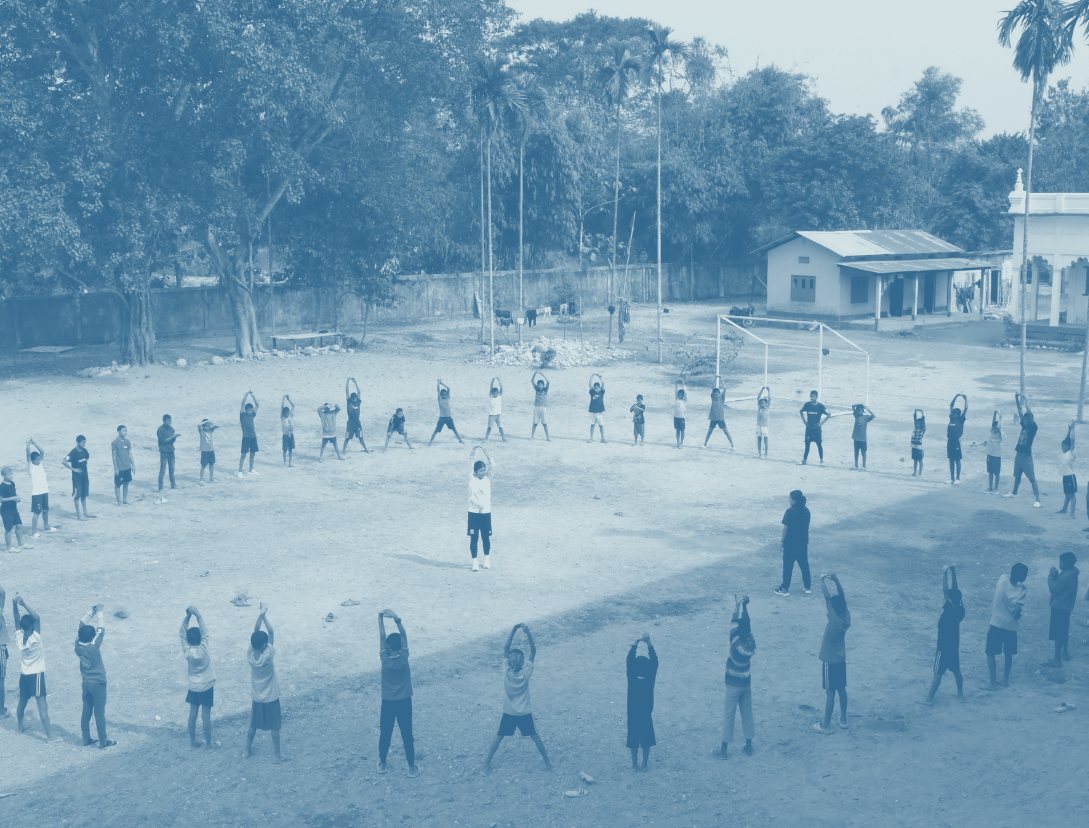
Chauntra, Himachal Pradesh, India
A monastic school from primary through high school at Dzongsar Khyentse Chokyi Lodro Institute.
Visit website →
Dewathang, Bhutan
An all-ages monastic school at Chökyi Gyatso Institute, combining Buddhist instruction with secular and modern curricula, alongside community-based programs.
Visit website →
Saugerties, New York, USA
One of the first Buddhist-based elementary and middle schools for children in the West.
Visit website →
Vancouver, Canada
A children’s weekend Dharma program for ages 6 to 12.
Visit website →
Czech Republic
A forest kindergarten and after-school program.
Visit website →
Perth, Australia
A weekend program for children ages 3 to 12 in the Bhutanese diaspora, weaving together Bhutanese identity, Buddhist values and playful learning in a multicultural setting.
Visit website →Shared principles
Each child has basic goodness and the capacity for wisdom, compassion, awareness, and ethical responsiveness.
These capacities are recognized, protected, and cultivated through supportive causes and conditions. This view is grounded in the Buddha's insight into impermanence, suffering, non-self, dependent arising, and the possibility of liberation from confusion and suffering.
Shared principles · v6, June 2026
We hold education as more than preparation for the workplace or the existing world, asking what kind of human beings education is cultivating.
We attend to the whole child — body, speech, and mind — cultivating conditions of safety, belonging, and embodied awareness so that each child's innate capacity for wisdom, compassion, awareness, ethical responsiveness, and benefit can be recognized, cultivated, and expressed.
Shared principles · v6, June 2026
We ground our approach in the teachings of the Buddha and the living lineages of practice that transmit it.
We ask how a human being learns to see clearly, act kindly, and live with awareness of dependent arising, and the causes of suffering and freedom.
Shared principles · v6, June 2026
The teacher's motivation, practice, ethical conduct, and inner life are inseparable from what is taught and how it is received.
The teacher's own contemplation of the dharma — where it inspires, where it remains mysterious, where there is still growth to do — is what makes teaching come alive.
Shared principles · v6, June 2026
We treat the physical and natural environment as a living partner in education.
The qualities of a place — its beauty, order, harmony, and interconnection with local culture and ecology — shape attention, conduct, relationship, and the inner lives of those who learn within it.
Shared principles · v6, June 2026
We ground our work in the Buddha's approach to teaching through experience, inviting children to cultivate their natural curiosity and capacity to investigate.
Together, we practice the discipline of wisdom and learn to examine inner experience and outer phenomena; to ask genuine questions; and to hold multiple perspectives and apparent contradictions.
Shared principles · v6, June 2026
We hold contemplation as the essential method through which the view becomes understanding and understanding becomes embodied.
Listening opens the door; contemplation helps us cross the threshold so we can practice applying the view in our lives. We cultivate in students, teachers, families, and administrators alike the capacity to reflect upon experience honestly, and allow the teachings to settle into lived wisdom.
Shared principles · v6, June 2026
We orient education toward two essential commitments: non-harm and benefit, for oneself and for others.
Children learn to recognize the causes and effects of their thoughts, words, and actions, refraining from what harms and cultivating what supports empathy, wisdom, compassion, and well-being. From this orientation, genuine liberation arises.
Shared principles · v6, June 2026
We each hold our curricula as evolving documents, rooted in the dharma.
Our curricula are responsive to the cultures, languages, and lived realities of those who teach and learn within them, and responsibly informed by contemporary developmental science and research-based educational methods.
Shared principles · v6, June 2026
We tend our organizations as interconnected living systems.
Appreciating education as a shared endeavor in which children, families, teachers, and the whole learning community participate, we are resilient enough to support each other's well-being and ability to flourish and awaken.
Shared principles · v6, June 2026